

Wellbeing
At Greenfield International School, we believe that wellbeing supports every aspect of school life and that we must help all our students to build mental, physical, social, and emotional resilience.
We have developed a reputation and KHDA recognition for our student care and our success in creating a psychologically safe space where children can be happy, feel empowered and grow into the best versions of themselves.
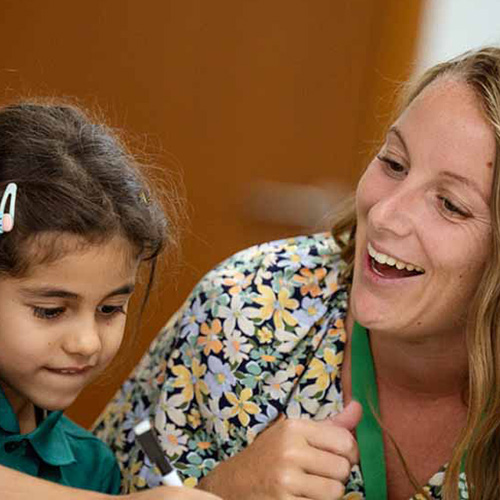
Positive Education Enhanced Curriculum (PEEC)
Care, guidance and welfare of our students are at the heart of our school community.
Making sure this happens is the responsibility of our Grade Level Coordinators and Home Room Tutors, who work closely with students to achieve both excellent academic results and valuable life skills.
For us, Positive Education is a commitment to educating the whole student so that good habits and strategies provide help to face the challenges of our ever-changing world, when they’re most needed. Regular assemblies, celebration days and a culture of reward and success sit behind our well-known GIS school spirit.
Personal, Social, Health and Economic Education (PSHE)
Taught through a combination of Homeroom and Specialist lessons, as well as community workshops and seminars, the PSHE curriculum is based on the UK National Curriculum strands:
- Health and Wellbeing
- Relationships
- Living in the Wider World
The programme is taught in a culturally sensitive manner that ensures the beliefs and values of all members of the community are respected.

Pastoral Care
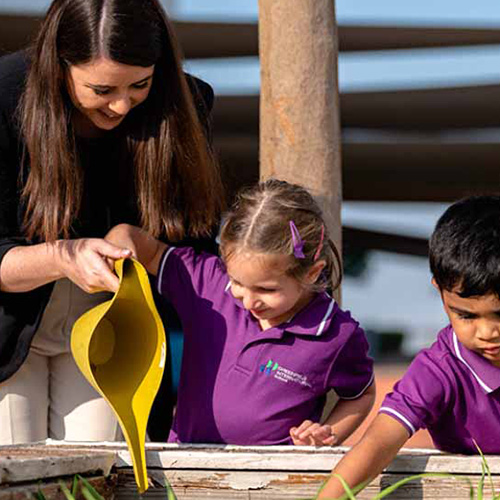
At Greenfield we aim to create an environment where students can grow and flourish, ensuring that students learn in a supportive, caring, and safe environment. Through a process based on respect, students are instilled to take ownership of their behaviour. Members of the school community know where they stand with regard to consideration for others, good manners and their many responsibilities to themselves and others. Grade level coordinators work with senior leadership to manage the pastoral care of our students. The school counsellor also works with students to support their social and emotional needs. The GIS environment is one where students can grow, flourish, and take ownership of their behaviour by using systems and processes based on respect, honesty, good manners, and consideration for others. Grade level coordinators work with senior leaders to manage the pastoral care of our students, and a School Counsellor is on hand to offer a little extra social and emotional support whenever it’s needed.
Counselling
Our school counsellor works with all new students to ensure a successful transition into GIS, as well as with those students who need additional support from time to time. Anyone who feels they need a little extra educational, academic, career, emotional, or social support, can meet our School Counsellor either alone or as part of a small group in a calm and reassuring environment. By offering a thorough school counselling programme that values and respects each student’s uniqueness and respects differences, GIS ensures that all students are encouraged and motivated to reach their full potential. This programme nurtures students to better meet their educational, academic, career, emotional, and social needs. The ultimate goal is to assist students in discovering their passions and skills, as well as to improve their dependability, productivity, self-expression, self-control, decision-making, and conflict-resolution skills, among other competencies that will address any weaknesses in the students’ abilities and help them develop into capable future leaders.
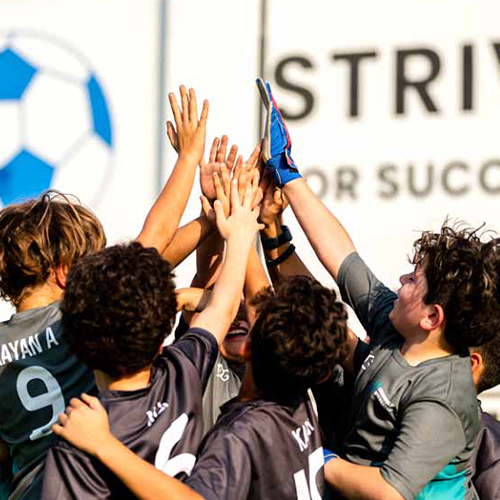
Restorative Practices & Behaviour Support
We help our students to build positive relationships because we know they are likely to be happier, more settled, and more productive in and out of class.
When we give students the tools and a chance to develop relationships – and repair them when they break, emotional competence and a clear sense of fair play and empathy emerge.
This favoured Restorative Justice Approach is embedded throughout the school to make sure we have a culture based on care and compassion. It also helps when harm has been caused by promoting empathy and interconnectivity between staff and students. A philosophy in action, it places relationships at the heart of each child’s educational experience. Working ‘with’ students to develop authentic relationships gives them a voice and agency.
